
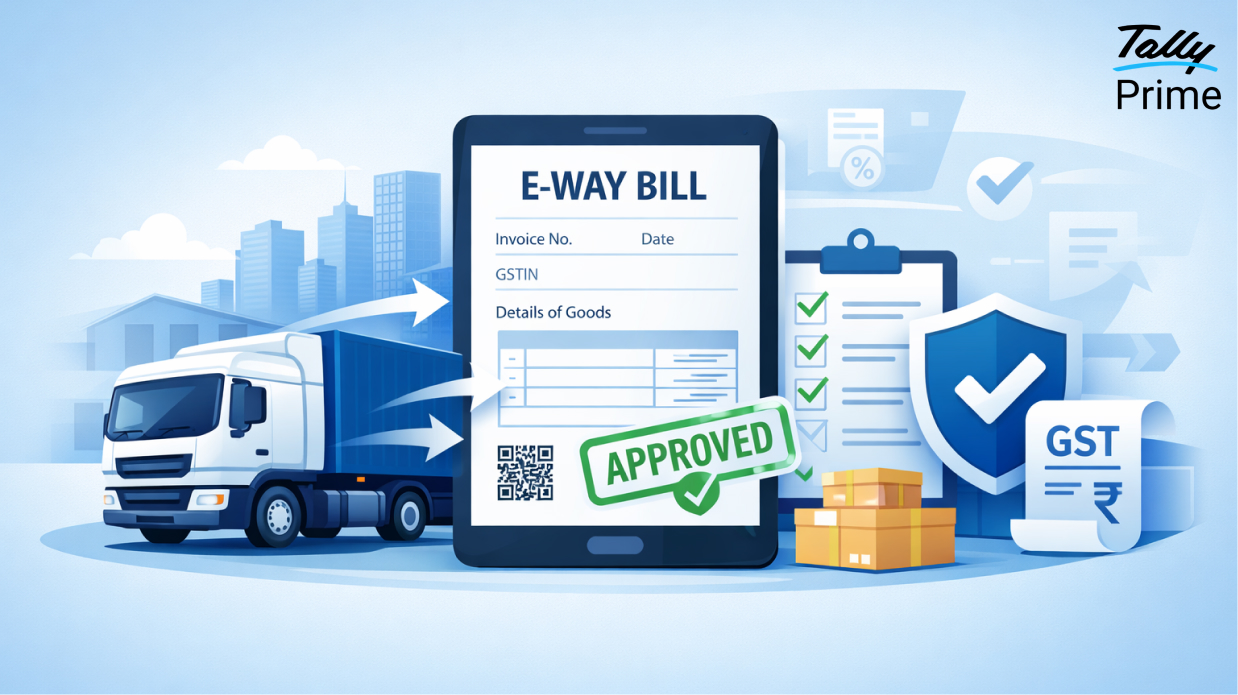
In today’s GST-driven business environment, compliance is not just a regulatory requirement—it is a critical part of smooth business operations. Among the various GST provisions, the E-Way Bill system plays a vital role in tracking the movement of goods. While it has simplified logistics and improved transparency, non-compliance can lead to penalties, delays, and even detention of goods.
For businesses involved in manufacturing, trading, or distribution, understanding how to maintain proper E-Way Bill compliance is essential. Even small errors in documentation or delays in generation can result in financial losses and operational disruptions. This blog explains in detail how businesses can avoid penalties and ensure seamless compliance.
Understanding the E-Way Bill System
An E-Way Bill is an electronically generated document required for the movement of goods above a specified value limit. It includes important details such as the consignor, consignee, goods description, invoice details, and transporter information.
The primary objective of the E-Way Bill system is to ensure that goods being transported comply with GST regulations and to prevent tax evasion. Authorities may verify these documents during transit, making accuracy and availability extremely important.
Why E-Way Bill Compliance Matters
Failure to comply with E-Way Bill regulations can result in:
- Monetary penalties
- Detention or seizure of goods
- Legal complications
- Delays in delivery schedules
For businesses, these issues not only increase costs but also affect credibility and customer satisfaction. Therefore, maintaining proper compliance is not optional—it is necessary for sustainable operations.
Common Mistakes That Lead to Penalties
Incorrect Data Entry
One of the most frequent causes of penalties is incorrect information. Errors in GSTIN, invoice number, product value, or vehicle details can lead to compliance issues during inspections.
Expired E-Way Bill
Each E-Way Bill has a specific validity period based on the distance of transportation. If goods are still in transit after expiry, penalties may be imposed.
Non-Generation of E-Way Bill
Transporting goods without generating an E-Way Bill when required is a direct violation of GST rules and can attract strict penalties.
Mismatch Between Documents
If there is any inconsistency between invoice details and the E-Way Bill, it can raise suspicion and lead to further verification or fines.
Failure to Update Transport Details
If the vehicle changes during transit and the details are not updated, it may result in non-compliance.
Effective Ways to Avoid E-Way Bill Penalties
Maintain Accurate Documentation
Accuracy is the foundation of compliance. Businesses must ensure that all details entered in the E-Way Bill are correct and match the invoice.
Generate E-Way Bill Before Dispatch
The E-Way Bill should always be generated before the movement of goods begins. Delayed generation is considered a violation.
Track Validity Period Carefully
Businesses must monitor the validity of each E-Way Bill and extend it if necessary. Ignoring expiry timelines can result in penalties.
Keep Required Documents Ready
During transit, the following documents should always be available:
- Invoice or bill of supply
- Delivery challan (if applicable)
- E-Way Bill number or copy
Update Changes Immediately
If there are any changes in transporter or vehicle details, they should be updated in the system without delay.
Train Employees Regularly
Employees responsible for billing and logistics must be trained on the latest E-Way Bill rules and compliance requirements. This reduces the chances of human error.
Leveraging Technology for Better Compliance
Manual processes increase the likelihood of mistakes. Businesses can significantly improve compliance by using automation tools such as TallyPrime.
With TallyPrime, businesses can:
- Generate E-Way Bills directly from invoices
- Reduce manual data entry errors
- Maintain consistency in records
- Track validity and status easily
- Ensure faster and more efficient compliance
Automation not only saves time but also enhances accuracy, which is critical for avoiding penalties.
Importance of Internal Controls and Audits
Businesses should implement internal controls to monitor compliance. Regular audits of E-Way Bill records help identify recurring mistakes and improve processes.
Internal checks can include:
- Verifying invoice and E-Way Bill consistency
- Reviewing expired or extended E-Way Bills
- Identifying data entry errors
- Ensuring proper documentation is maintained
A proactive approach helps businesses avoid issues before they arise.
Benefits of Staying Compliant
Proper E-Way Bill compliance offers several advantages:
Smooth Logistics Operations
Goods move without interruptions, ensuring timely delivery.
Cost Savings
Avoiding penalties and delays reduces unnecessary expenses.
Improved Business Reputation
Compliance builds trust with customers and authorities.
Better Efficiency
Streamlined processes improve overall productivity.
Practical Best Practices for Businesses
To ensure complete compliance, businesses should follow these best practices:
- Always generate the E-Way Bill before dispatch
- Double-check all entered data
- Monitor validity periods regularly
- Keep documents accessible during transit
- Use reliable software like TallyPrime
- Train staff on compliance procedures
- Conduct periodic audits
Consistency in following these practices ensures long-term compliance.
Conclusion
The E-Way Bill system is an essential part of GST compliance and plays a significant role in regulating the movement of goods. While the process is straightforward, even minor errors can lead to serious consequences.
Businesses that focus on accuracy, timely action, and proper documentation can easily avoid penalties. By adopting automated solutions like TallyPrime and implementing strong internal processes, compliance becomes more efficient and reliable.
Ultimately, avoiding penalties is not about complex strategies—it is about maintaining discipline and ensuring that every step is handled correctly.